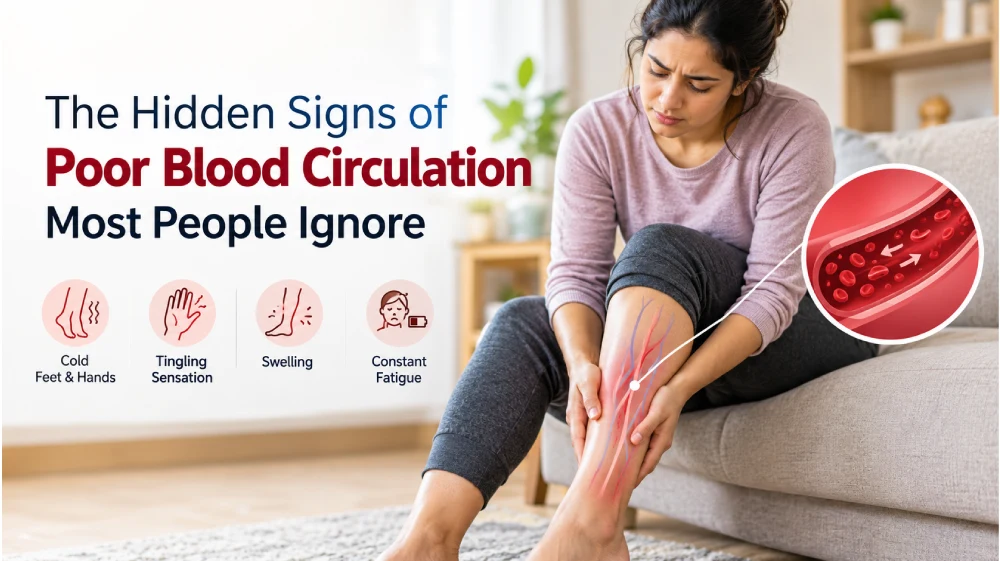
Poor blood circulation occurs when narrowed or blocked blood vessels restrict blood flow, making it difficult for your body to efficiently distribute oxygen and nutrients to every part of your body. Older individuals and overweight and diabetic people who don’t get much exercise often experience poor circulation issues. Many people ignore symptoms such as cold feet, tingling, numbness, and muscle cramps.
These symptoms often affect your legs, hands, fingers, feet, and toes. Circulation issues sometimes signal serious health issues. If left untreated, they can lead to complications such as heart disease and nerve damage. Recognizing the warning signs and symptoms is essential to seeking timely medical advice. Below, we will explore the symptoms, effects, and proactive steps to improve vascular health.
The Hidden Circulation Symptoms People Ignore
Poor circulation is a silent, creeping issue that many people ignore. Recognizing the subtle signs can help you spot and prevent long-term blood flow problems.
1. Cold Feet (and Hands) That Never Seem to Warm Up
Your hands and feet are farthest from your heart, so they require proper blood flow to maintain their temperature. When blood circulation is poor, the cardiovascular system struggles to pump an adequate volume of blood to that area, leading to constant coldness even in warmer environments or weather. This symptom is frequently linked to narrowed or blocked arteries, a condition commonly known as peripheral artery disease (PAD). This happens due to plaque buildup, high cholesterol, or lifestyle factors such as smoking, which can narrow the arteries, slowing blood flow. If you experience persistent cold feet and cold hands, it’s critical to consult a healthcare provider to rule out an underlying nerve or vascular condition.
2. Numbness and Tingling Sensations in Feet or Fingers
If you experience a persistent pins-and-needles sensation, it may be due to poor circulation. When blood flow is restricted, nerve tissue in your feet and fingers does not get enough oxygen and the essential nutrients it requires to function properly. To signal this distress, nerves give a signal to the brain, which then manifests as numbness or tingling. Occasional numbness is totally normal and can happen when sleeping in an awkward position or sitting cross-legged. However, if you are experiencing it continuously, it indicates restricted blood flow and an underlying condition that requires attention.
3. Discolored, Pale, Bluish, or Blotchy Skin
Poor blood flow can impact your skin. When blood and oxygen supply to your limbs are restricted, it can cause noticeable changes in skin color and texture. A pale or excessively shiny skin tone on your legs indicates a lack of oxygen-rich blood reaching the tissues. On the other hand, a bluish or purplish color indicates low blood supply, and tissues are starved of oxygen. In conditions like Raynaud’s phenomenon, when you’re exposed to cold or stress, the tiny blood vessels in your fingers and toes can narrow or close. This cuts off blood flow, causing the skin to turn white, then blue, and eventually red as blood rushes back upon warming.
4. Frequent Muscle Cramps or Chronic Fatigue
Muscle cramps and chronic leg fatigue are common circulation symptoms of insufficient blood flow. When blood does not circulate correctly, muscle tissues do not get enough oxygen, which they require to function properly during everyday activities such as standing and walking. Lack of oxygen leaves your muscles stiff, fatigued, and painful. Without proper circulation, metabolic byproducts such as lactic acid accumulate in tissues. People with these symptoms may be experiencing an early stage of PAD. Moreover, because poor blood circulation reduces the body’s oxygen-carrying capacity, it can lead to chronic fatigue, leaving a person feeling tired and sluggish without physical exertion.
5. Swelling in Leg, Ankles, and Feet
Medically referred to as “edema,” the swelling in the lower extremities is commonly caused when blood struggles to flow back up to the heart. If your valves in your leg veins are weakened or leaking, blood can pool in your legs and feet. The accumulating pressure forces fluid to leak out of the blood vessels into the surrounding tissues, leading to swelling in the legs and ankles. These symptoms can worsen after prolonged sitting or standing. When ignored, fluid buildup and pooling blood can lead to heaviness, painful inflammation, and stasis dermatitis. Managing it requires gentle exercise, elevating the leg, and consulting a professional vascular specialist for proper treatment.
The Dangerous Ripple Effect of Blood Flow Problems
Poor circulation can affect the entire body because blood carries oxygen and nutrients to every organ and tissue. When blood flow is restricted, health problems can develop:
1. Effects on the Limbs: Reduced circulation can cause cold hands and feet, numbness, tingling, muscle cramps, and slow-healing wounds. In severe cases, it may lead to tissue damage.
2. Effects on Vital Organs: Poor blood flow can reduce oxygen supply to important organs. Restricted circulation to the brain may increase stroke risk, while reduced blood flow to the heart can contribute to heart disease and chest pain.
3. Blood Vessel Complications: Narrowed or damaged blood vessels can increase the risk of blood clots. If a clot travels to the brain, lungs, or heart, it can become a serious medical emergency.
Proactive Steps for Better Vascular Health
Here are 5 steps you can take for better vascular health:
- Follow a heart-healthy diet rich in fruits, vegetables, whole grains, beans, and healthy fats while limiting processed foods and excess salt.
- Stay active with regular exercise such as walking, cycling, or swimming to improve circulation and support heart health.
- Avoid smoking and limit alcohol consumption, as both can damage blood vessels and increase cardiovascular risks.
- Manage stress through relaxation techniques and aim for 7–8 hours of quality sleep each night.
- Schedule regular health check-ups to monitor blood pressure, cholesterol, and blood sugar levels and detect problems early.
Final Insight
Poor blood circulation often develops slowly, making its warning signs easy to overlook. Symptoms such as cold hands and feet, numbness, tingling, muscle cramps, skin discoloration, and swelling may signal an underlying vascular problem. Ignoring these signs can increase the risk of serious complications, including heart disease, stroke, blood clots, and nerve damage. Recognizing symptoms early and seeking medical advice can help prevent long-term health issues. Additionally, simple lifestyle changes, including regular exercise, a balanced diet, stress management, and routine health screenings, can improve circulation, support vascular health, and protect your overall well-being.