Best Ankle Support Braces: Independent Testing, Science & Comparison

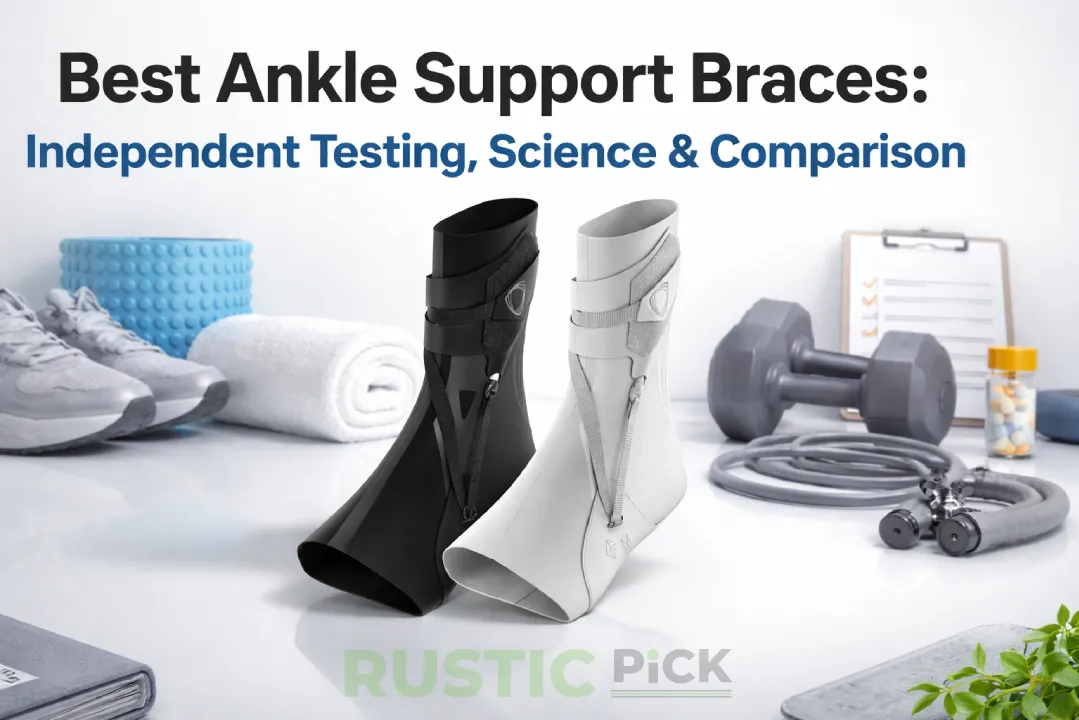
The era of the simple “ACE bandage” is over. Modern ankle bracing has evolved into a high-tech industry featuring hydraulic pistons, 3D-knitted medical compression, and thermoplastic exoskeletons.
Whether you are an elite basketball player looking to protect a multimillion-dollar career (like Stephen Curry with Zamst), a soccer player needing a slim profile for cleats, or a post-surgical patient managing edema, there is a specialized tool for your needs.
This guide breaks down the biomechanics of injury, the physics of support, and reviews the top brands- BetterGuards, Zamst, McDavid, Bauerfeind, Ultra Ankle, DonJoy, and more to help you make the right investment for your mobility.
Quick Picks: The Executive Summary
For those who need immediate guidance, here are the top performers categorized by specific use-case scenarios.
- Best Overall for Court Sports (Basketball/Volleyball):Zamst A2-DX
- Why: It offers the highest level of lateral protection without restricting jumping ability. It is the gold standard for “heavy-duty” athletic support.
- Best High-Tech Innovation:The BetterGuard
- Why: It features a revolutionary adaptive piston that moves freely during normal running but locks instantly during a high-velocity roll. It is the “smart brace” of the future.
- Best for Swelling & Recovery (Edema):Bauerfeind MalleoTrain
- Why: Medical-grade German knitting provides compression to reduce fluid buildup, while gel pads massage the joint. It is unmatched for comfort.
- Best Value / The “Locker Room” Standard:McDavid 195
- Why: Affordable, durable, and effective. It mimics a professional tape job using a canvas lace-up system.
- Best for High Ankle Sprains (Syndesmosis):Ultra Ankle Ultra High-5
- Why: Its hinged-cuff design specifically prevents the twisting/rotation of the lower leg, which is the mechanism that causes high ankle sprains.
- Best Low-Profile for Cleats (Soccer/Football):Push Sports Aequi (via BraceLab)
- Why: It uses a medial-anchor design that leaves the outside of the foot and heel relatively free, preserving ball touch and shoe fit.
Understanding the Injury: What Are We Protecting?
To choose the right brace, you must understand the enemy. “Ankle support” is a vague term. Different braces are designed to stop different mechanical failures.
1. Lateral Ankle Sprains (Inversion)
This accounts for roughly 85% of all ankle injuries. It happens when the foot rolls inward (supination), stretching or tearing the ligaments on the outside of the ankle—specifically the Anterior Talofibular Ligament (ATFL) and the Calcaneofibular Ligament (CFL).
- The Fix: You need a brace with lateral stiffness. This can be a plastic shell or a non-stretch “Figure-8” strap that acts as an external ligament to catch the ankle before it rolls too far.
2. High Ankle Sprains (Syndesmotic Injury)
This is a more severe injury involving the ligaments above the ankle joint (the syndesmosis) that hold the tibia (shin bone) and fibula (outer leg bone) together. This injury is usually caused by rotation or twisting, not just rolling.
- The Fix: Standard lace-up braces often fail here. You need a brace with a hinged cuff (like the Ultra Ankle) that wraps around the lower leg to squeeze the tibia and fibula together and prevent rotation.
3. Chronic Instability & Proprioception Deficits
After multiple sprains, ligaments can become permanently stretched (laxity). Furthermore, the nerve endings in the ankle are damaged, meaning your brain loses “proprioception”—the sense of where your foot is in space. This leads to “clumsy” steps and re-injury.
- The Fix: You don’t always need a rigid cast. Often, a tight compression sleeve (like Bauerfeind) is superior because the tactile pressure on the skin stimulates the nerves, heightening your body’s awareness and reaction time.
4. Edema (Swelling)
Post-injury or post-surgery, the ankle accumulates fluid.
- The Fix: Rigid braces can trap this fluid, causing pain. Graduated compression is required to mechanically pump fluid away from the joint and back toward the heart.
Buying Factors: The Rigidity vs. Mobility Spectrum
The fundamental rule of ankle bracing is: Support comes at the cost of Mobility.
You cannot have a brace that locks your ankle like a cement block and also allows you to sprint like Usain Bolt. You must find your position on the spectrum.
Level 1: Compression Sleeves (Proprioception)
- Materials: Elastic knit, bamboo charcoal, neoprene.
- Function: Warmth, blood flow, swelling reduction, sensory feedback.
- Best For: Arthritis, minor tendonitis, post-run recovery, daily walking.
- Limitations: Will not stop a traumatic sprain. If you land on someone’s foot, this sleeve will not save you.
Level 2: Soft Lace-Ups with Straps (Mechanical Support)
- Materials: Canvas, ballistic nylon, polyester.
- Function: Mimics athletic taping. The laces provide a tight fit, and the straps (usually Figure-6 or Figure-8) provide tension limits.
- Best For: Football practice, preventative use in high school sports, mild instability.
- Limitations: Fabric stretches. After 20-30 minutes of intense play, these braces loosen up and lose about 20-30% of their support.
Level 3: Semi-Rigid / Hinged (Exoskeleton)
- Materials: Hard plastic (polypropylene), hinges, Velcro.
- Function: A physical barrier. The plastic shell prevents the ankle from moving past a certain angle.
- Best For: Volleyball, Basketball, recovering from Grade II/III sprains.
- Limitations: Bulk. These are hard to fit into slim shoes (like soccer cleats or track spikes). They can feel restrictive.
Level 4: Adaptive Technology (The New Class)
- Materials: Hydraulic systems, advanced textiles.
- Function: Moves freely during low-speed motion, locks during high-speed motion.
- Best For: Elite performance where speed is critical.
Brand-by-Brand Deep Dive Reviews
We have analyzed the top brands available on the market today. Here is how they stack up.
1. BetterGuards (The Technological Leap)
Website: betterguards.com Category: Adaptive Protection
The Tech: BetterGuards is arguably the most innovative company in this space right now. They have moved away from “static” plastics and developed the BG Protection System. This is a mini-piston integrated into the side of the brace.
- How it works: Think of it like a seatbelt. When you pull a seatbelt slowly, it extends. When you yank it (like in a crash), it locks. The BetterGuard piston works similarly using fluid dynamics. During normal running or jumping (low angular velocity), the piston moves freely. You feel like you are wearing a flexible sleeve. However, if you roll your ankle (high angular velocity), the piston locks within milliseconds, stabilizing the joint.
Pros:
- Zero restriction on running speed or vertical jump.
- Fits easily into shoes (low profile).
- Prevents the muscle atrophy associated with rigid braces because the ankle is working 99% of the time.
Cons:
- Price: This is premium technology and comes with a higher price tag than a standard drugstore brace.
- Availability: Often sold in “drops” or specific releases.
Verdict: The best choice for the serious athlete who hates the “clunky” feel of traditional braces.
2. Zamst (The Professional’s Choice)
Website: zamst.us Category: Rigid / Hybrid Support
The Flagship: Zamst A2-DX If you watch the NBA, you have seen this brace. It was popularized by Stephen Curry to protect his ankles after repeated surgeries.
The Design: The A2-DX is a masterpiece of engineering. It combines a sleeve, a strap system, and a rigid plastic exoskeleton (Exo-Grid).
- X-Strap Stabilizers: Prevent the foot from sliding forward, lateral, and medial.
- Exo-Grid: The defining feature. These are rigid plastic guards that run up the inside and outside of the ankle. Crucially, they are connected by a hinge. This allows for full plantarflexion (pointing toes down) and dorsiflexion (toes up), which are the movements needed to run and jump. However, the rigid plastic completely blocks inversion (rolling out) and eversion (rolling in).
Pros:
- Maximum stability available on the market short of a medical walking boot.
- Does not restrict vertical leap.
- Extremely durable.
Cons:
- Bulk: It is wide. You will likely need to loosen your shoelaces significantly or even buy basketball shoes a half-size bigger.
- Complexity: Putting it on requires a specific sequence of Velcro and fasteners.
3. Bauerfeind (The Medical Gold Standard)
Website: bauerfeind.us Category: Medical Compression / Active Recovery
The Flagship: MalleoTrain / MalleoTrain Plus Bauerfeind is a German medical company, and their approach is different. They focus on active recovery rather than just immobilization.
The Tech: They use a proprietary 3D “Train” knit. This fabric is not neoprene; it is a breathable, moisture-wicking weave that provides medical-grade graduated compression (Class II).
- Viscoelastic Pads: The MalleoTrain features two comma-shaped gel pads that sit behind the malleolus (ankle bones). As you walk or run, the muscle movement pushes these pads against the soft tissue. This creates an intermittent massage effect that physically pumps edema (swelling) out of the joint.
Pros:
- Comfort: You can wear this for 14 hours a day without itching or sweating.
- Swelling Reduction: The best product on the market for managing “cankles” or post-sprain fluid.
- Fit: Slim enough to fit in dress shoes, running sneakers, or cleats.
Cons:
- Support Limit: While the “Plus” version adds a strap, this is primarily a stability and recovery brace. It is not a rigid shield against high-impact traumatic sprains like the Zamst.
4. McDavid (The Locker Room Classic)
Website: mcdavidusa.com Category: Lace-Up / Soft Support
The Flagship: McDavid 195 If you walk into any high school or college training room, you will see piles of these.
The Design: The 195 is designed to simulate a professional tape job. It is a polyester vest that laces up the front, featuring a “Figure-6” strap that mimics the heel-lock taping technique used by athletic trainers.
Pros:
- Durability: These things are tanks. One pair will last a football player an entire season of daily practice.
- Cost-Effective: High protection for a lower price point.
- Adjustability: You can crank the laces tight for practice and loosen them for the walk home.
Cons:
- The “Break-In”: Out of the box, they are stiff and uncomfortable. They require 2-3 wears to mold to the foot.
- Heat: They are made of heavy canvas/nylon. They get hot and sweaty.
- Loosening: Like all fabric braces, they stretch slightly during play and may need retightening at halftime.
5. Ultra Ankle (The Anti-Rotation Specialist)
Website: ultraankle.com Category: Hinged Shell / High Ankle Support
The Flagship: Ultra High-5 Ultra Ankle takes a different biomechanical approach. While most braces focus on the ankle joint itself, Ultra Ankle focuses on the lower leg geometry.
The Design: The Ultra High-5 features a semi-rigid shell with a hinged cuff.
- Why the Cuff Matters: For high ankle sprains (syndesmosis), the danger is the tibia and fibula separating or twisting. The Ultra Ankle cuff wraps around the upper ankle to lock these bones together and prevent rotation.
Pros:
- Thermoplastic Molding: The shell uses body heat to mold to your specific foot shape after a few hours of wear.
- High Ankle Protection: Superior to almost any other brand for syndesmotic injuries.
- Lightweight: Surprisingly light for how much plastic is involved.
Cons:
- Feel: It feels very different from a soft brace. It can feel “clunky” until it molds to you.
6. BraceLab / Push Sports (The Minimalist)
Website: bracelab.com Category: Low Profile / Soccer Specific
The Flagship: Push Sports Ankle Brace Aequi Soccer players present a unique challenge: they need rigid support, but they cannot have bulk on the heel or the top of the foot because it ruins their touch on the ball and fit in tight cleats.
The Design: The Push Aequi uses a rigid anchor only on the medial (inside) of the ankle. The lateral (outside) is supported by non-elastic straps.
- The Concept: Since most sprains are inversion (rolling out), the rigid medial anchor acts as a pillar. The straps pull the foot against this pillar, preventing the roll, without covering the whole foot in plastic.
Pros:
- Cleat Compatibility: The best rigid brace for soccer cleats.
- Ball Touch: Leaves the instep and heel largely exposed.
Cons:
- Specific Fit: If the medial anchor doesn’t fit your ankle bone shape perfectly, it can be uncomfortable.
7. DonJoy (The Clinical Heavyweight)
Website: donjoystore.com Category: Orthopedic / Post-Op
The Flagship: DonJoy Velocity or Stabilizing Pro DonJoy (DJO) is a medical device giant. Their products are often what you receive at a doctor’s office.
The Design: The Velocity is a hard-shell brace designed for maximum control. It is less about sports performance and more about “do not let this joint move.” The Stabilizing Pro is their version of the lace-up (similar to McDavid) but often with more robust materials.
Pros:
- Protection: The Velocity offers protection levels close to a walking boot.
- Trust: Clinical-grade testing and materials.
Cons:
- Bulk: The rigid models are very bulky.
- Stiffness: Not ideal for sports requiring high agility; better for linemen or recovery.
8. Compression Health / Ames Walker (The Distributors)
Websites: compressionhealth.com | ameswalker.com Category: Medical Hosiery / Circulation
These retailers specialize in compression therapy. While they sell branded braces, their house-brand or curated selections of compression sleeves focus on circulation.
The Use Case: If you have chronic venous insufficiency, swelling from diabetes, or just general fatigue, look for Graduated Compression (measured in mmHg).
- 15-20 mmHg: Over-the-counter, good for travel and mild swelling.
- 20-30 mmHg: Medical grade, ideal for moderate edema and post-surgery recovery.
Verdict: Go here for sleeves to wear after the game or during the work day to manage fluid.
Performance Analysis: Sports vs. Recovery
It is critical to distinguish between Performance (Prevention) and Recovery (Rehabilitation).
For Sports Performance (Prevention)
- Goal: Prevent the ankle from exceeding its range of motion during explosive cuts, without slowing the athlete down.
- The Conflict: You need sagittal mobility (up/down) for speed, but frontal stability (side-to-side) for safety.
- Top Recommendations:
- Zamst A2-DX: Best for jumping sports where landing on feet is a risk.
- BetterGuards: Best for running/cutting sports where speed is paramount.
- McDavid 195: Best for contact sports (football/rugby) where durability matters.
For Recovery (Rehabilitation)
- Goal: Reduce inflammation, provide sensory feedback, and protect damaged tissue while walking.
- The Conflict: A rigid brace on a swollen ankle causes pressure points and pain.
- Top Recommendations:
- Bauerfeind MalleoTrain: The knit adapts to the swelling fluctuation throughout the day.
- DonJoy Stabilizing Pro: Good for the transition phase (getting out of a boot and back to walking).
Pros & Cons of Wearing Ankle Braces
There is often debate in the physiotherapy world about whether braces should be worn long-term. Here is the breakdown.
Pros (The Good)
- Mechanical Stop: A rigid brace physically prevents the joint from entering the “danger zone” (excessive inversion). It is simple physics.
- Proprioception: The pressure of the brace on the skin heightens brain awareness. You are less likely to take a “lazy step” when you feel the compression.
- Confidence: The psychological benefit is massive. An athlete who is afraid of re-injury plays hesitantly, which ironically leads to more injuries. A brace allows them to play aggressively.
- Swelling Control: Compression models actively pump fluid away from the injury site, speeding up healing.
Cons (The Bad)
- Shoe Fit: Rigid braces often distort the shape of your shoe. You may need to remove the shoe’s insole or buy a shoe half a size larger.
- The “Weakening” Myth: There is a fear that wearing a brace weakens the ankle.
- Reality: Wearing a brace during activity does not weaken the ankle significantly. However, relying on a brace instead of doing rehab exercises is bad. If you wear a brace, you must also do balance work (single-leg stands) when barefoot.
- Knee Transfer: Some studies suggest that by locking the ankle, force is transferred up the chain to the knee. While this risk is generally considered low compared to the benefit of saving the ankle, it is why “hinged” braces (Zamst/BetterGuards) are preferred over fully locked ones.
- Skin Issues: Neoprene and polyester can cause blistering, chafing, or heat rash, especially in hot climates.
Final Verdict & Recommendation
The “I Just Want to Play Basketball” Pick
Buy the Zamst A2-DX. Yes, it is expensive (~$60-$80). Yes, it looks like a robot part. But if you have bad ankles, it is the only thing that will let you land on someone’s foot and not sprain yours. It is the best insurance policy for your ligaments.
The “I Want to Run/Walk Without Pain” Pick
Buy the Bauerfeind MalleoTrain. If you are a runner or a hiker dealing with chronic soreness or mild arthritis, do not buy a rigid brace. It will change your gait and hurt your knees. Buy the Bauerfeind. The medical compression will keep your ankle feeling “fresh” and stable without restricting your stride.
The “Budget / Team” Pick
Buy the McDavid 195. If you are outfitting a whole team or just need something for occasional pickup games, the McDavid 195 is the best value. It is durable, effective, and gets the job done for under $40.
The “Money Is No Object” Pick
Buy The BetterGuard. If you want the closest thing to having a bionic ankle—complete freedom of movement 99% of the time, with instant protection the 1% of the time you need it—this is the technology to buy.
Frequently Asked Questions (FAQs)
Rigid/Lace-up (Zamst, McDavid, DonJoy): Wear these OVER a tall athletic sock. The materials are rough (canvas/plastic) and will cause severe blistering if worn directly on the skin.
Compression/Sleeve (Bauerfeind, BetterGuards): Generally designed to be worn directly ON the skin (under the sock) for maximum proprioception and moisture-wicking. However, some people prefer a very thin liner sock underneath if they have sensitive skin.
Ankle braces accumulate sweat and bacteria quickly.
Drying: Air Dry Only. Never put a brace in the dryer. The heat will destroy the elastic fibers, melt the plastic glues, and warp the rigid shells.
The Protocol: Close all Velcro straps (so they don’t tear up the fabric or get stuck to other clothes). Place the brace in a mesh laundry bag. Wash on Cold/Delicate cycle with mild detergent.
Yes. Many athletes (especially in volleyball and basketball) wear braces prophylactically on both ankles, even if only one is injured. This maintains balanced weight distribution and prevents future injuries on the “good” ankle, which often takes more load to compensate for the bad one.
Do not guess. Sizing varies wildly between brands.
- Method: Most brands size by shoe size, but some (like Bauerfeind) size by ankle circumference.
- The Diagonal Measurement: For slip-on braces, you often need to measure the circumference of the ankle diagonally over the heel and the instep.
- Between Sizes? If you are between sizes on a rigid brace, usually size up for comfort. If between sizes on a compression sleeve, size down to ensure you get adequate compression.
Generally, no.
- Rigid Braces: Never sleep in a rigid or lace-up brace. It can cut off circulation and cause pressure sores.
- Compression: You can sleep in a light compression sleeve if it is low compression (15-20 mmHg) and comfortable, but it is usually better to let the skin breathe at night unless directed otherwise by a doctor.
Most standard braces (McDavid 195, Zamst A2-DX) will not fit well in a soccer cleat without stretching the shoe significantly. For soccer, look specifically for:
- Push Sports Aequi (BraceLab)
- Zamst Filmista (a super-thin film support)
- Bauerfeind MalleoTrain (Sleeve)
Rigid Braces: Can last 1-2 years or more.
Lace-Up/Fabric: Usually last one competitive season (6 months) before the fabric stretches too much to provide support.
Compression Sleeves: Elasticity usually holds for 6-9 months of daily wear if washed correctly.